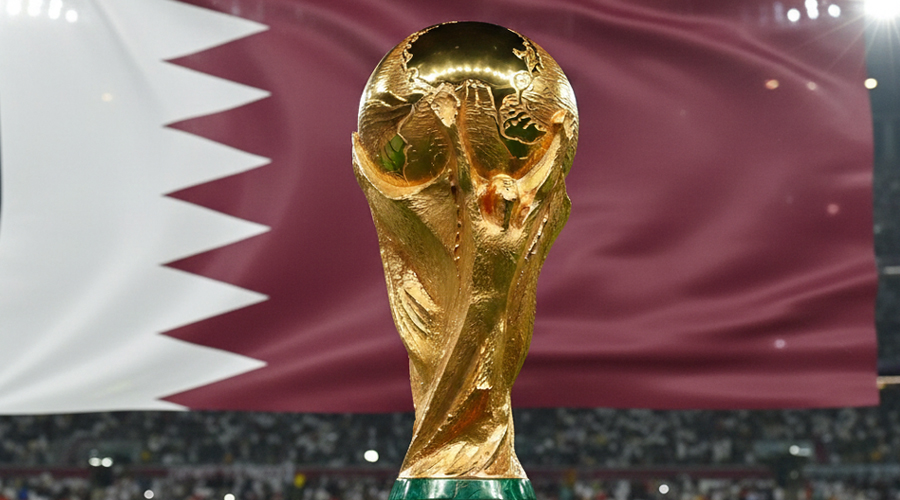
In football, reality lives on the pitch, far beyond the privileges of a host nation status. For the Qatar National Football Team, securing a ticket to the 2026 World Cup is no longer a host privilege—it is a well-deserved triumph. In 2022, Qatar hosted the World Cup. The global spotlight shone brightly on them, stadiums filled beyond capacity, and the organization earned widespread praise. However, things were complicated on the field. Football is judged by performance, not by an invitation. The tournament ended for them with three group-stage defeats and zero points. Visibility gained through hosting rather than football quality is never permanent.
“We Can Do It on Our Own Merits” — Stepping onto the Pitch
And here comes the turning point: In October 2025, the Qatari national team qualified for the 2026 World Cup for the first time through their own performance—via the qualifiers. The opponent: United Arab Emirates national football team (UAE). The final score was 2–1, with Boualem Khoukhi and Pedro Miguel taking center stage. This result meant a ticket “earned squarely on the pitch” for Qatar.
The team is currently managed by Julen Lopetegui. The Spanish tactician wants the ball to do the talking and focuses on winning match by match. They are working hard to change the narrative from “we were invited” to “we earned our place.” While the squad features seasoned veterans like Akram Afif and Almoez Ali, the real emphasis is on the youth academy and the next generation. This qualification—far from the ghost of their past hosting duties—is a launchpad for a brand-new beginning.
The “Just the Host” Label Was No Longer Enough
Many countries have drawn global attention as World Cup hosts, but simply earning a spot as a hospitality privilege does not leave a lasting legacy. Today’s football landscape demands on-pitch performance, grassroots investment, and stability—rather than just revenue, tourism charm, or state-of-the-art stadiums. Qatar clearly sees this reality.
Qatar’s vision extends well beyond 2026; they are also bidding for the 2036 Olympic Games. The existing infrastructure, world-class facilities, and financial backing are all geared toward this goal. Whether FIFA or the IOC approves, this move showcases the “instrumentality of sports.” Football and the Olympics are not just image games; they are part of a meticulously planned national strategy.
But Are There Still Doubts?
-
Home advantage in the qualifying group: A minor detail, yet one that cannot be overlooked.
-
Experience still matters: Young talents and veteran players are sharing the pitch. While this can turn into a great strength, consistency takes time.
-
The global football arena is ruthless: Even with the expanded 48-team format, expectations and competition are higher than ever. Qatar is chasing an identity that goes beyond just participating.
Qatar’s Story: A Modern Experiment in Sports as a National Strategy
This step taken toward the “Qatar World Cup 2026” is a move that challenges football’s traditional paradigms. They want a place earned through merit, not just modern stadiums, wealth, or organizational power. Perhaps they were once remembered as the “host that suffered an embarrassing defeat.” This time, they hope to be unforgettable.
Qatar’s new chapter on the pitch demonstrates how football can evolve into a strategic state project. It is a story where vision, strategy, patience, and ultimately, “belief” take center stage.
In Brief: Quick Facts in Two Minutes
-
Why did Qatar go through the qualifiers for the 2026 World Cup instead of using a host privilege? They competed as hosts in 2022 but failed to earn a single point in the group stage. This time, they committed to qualifying solely through their on-pitch performance.
-
What happened in the qualifying campaign that led Qatar to success? They secured a crucial 2–1 victory against the UAE. Goals by Boualem Khoukhi and Pedro Miguel pushed them to the top of the group, marking their first-ever strictly earned World Cup ticket.
-
Why is this move important? In both football and international relations, real prestige is earned on the field, not through lavish hosting. This is Qatar’s ultimate target.
-
Is the future plan limited to 2026? No. They are bidding for the 2036 Olympics, proving that sports are being used as a vital tool for infrastructure, international prestige, and sustainable development.